
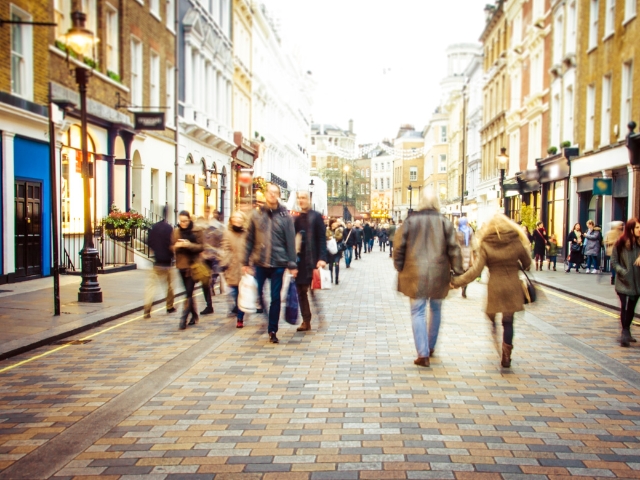
Historic buildings can provide a unique and characterful home for a business. Often – and particularly in smaller towns across the Thames Valley – they are conveniently located in attractive central locations. With sympathetic adaptation they can provide an exceptional setting for small offices, shops, lifestyle businesses or cafes.
There are many potential positives, including the environment you can create for staff and customers, allied with the unique sense of place that often comes with a historic building. Re-purposing to commercial use is also an excellent way to safeguard significance and preserve heritage assets within the built environment. Naturally, there are constraints and limitations. The listing status of the building and whether it’s in a Conservation Area will affect the extent of possible alterations.
The building fabric can also present challenges, including the need to employ traditional craftsmen, incompatibility with modern building materials, and the challenge of complying with modern statutory requirements (e.g. fire precautions), whilst making changes reversible, legible, and with the minimum loss of original fabric.
These issues can be expensive to overcome, so taking expert professional advice early-on is essential. A building surveyor with conservation experience who is versed in dealing with listed and heritage buildings can save you a great deal of time. They will help you avoid wasting money on design concepts that are technically unfeasible or likely to be unacceptable to planning authorities.
Check the Listing Status
It’s essential to confirm the status of the building at an early stage as this will heavily influence the extent and type of modifications that will be allowed. Listed buildings are graded I, II*, or II, with Grade I being the most restricted.
Around 92% of listed buildings are Grade II, which means they are of general architectural or historical interest. This provides a reasonable scope for modifications as long as they are in-keeping and maintain the character of the building.
Grade II* usually indicates the presence of specific architectural features such as fireplaces or a king post that will have to be retained. Any proposed alterations, internal or external, must preserve the significance of the building (often defining features such as windows, beams and façades) – but these are generally the things you’d want to preserve anyway. Changes will generally require Listed Building Consent from the local planning authority, over and above general planning permission.
Repairs
The perceived view is that repairs that are ‘like for like’ can be carried out without consent. This is not always the case. The wording S.7 of Planning (Listed Building and Conservation Areas) Act 1990 makes it clear that alteration in any manner which would affect the property’s character as a building of special architectural or historic interest is an offence.
Taking expert advice can often be essential, as even in-keeping repairs can change the character of the building if they are excessive or the principles of conservation philosophy have not been adhered to. There is no time limit on enforcement action, and the planning authorities will often act if an infringement is discovered, often during the course of another un-related planning matter years later.
If there is any doubt, then advice is needed in order to establish whether proposed works to a listed building would be lawful i.e. they would not affect the character of the listed building as a building of special architectural or historic interest and therefore, would not require listed building consent.
Compliance
Concerns such as accessibility, fire safety and energy efficiency are routine considerations for modern commercial premises. These have to be balanced with heritage preservation, which isn’t always straightforward. Modifications that are easily reversed, and non-invasive services such as wireless fire detection systems can help achieve compliance without damaging the building fabric or character.
The Thames Valley has a wealth of historic buildings with the potential to house a variety of businesses. Rather than assume that adapting it to your needs will be too difficult or, worse still, assuming that you’ll have a free hand, contact Lloyd Rockall for expert advice on what would be technically feasible and potentially acceptable in terms of building conservation.
l.rockall@hicksbaker.co.uk
0118 467 1712